
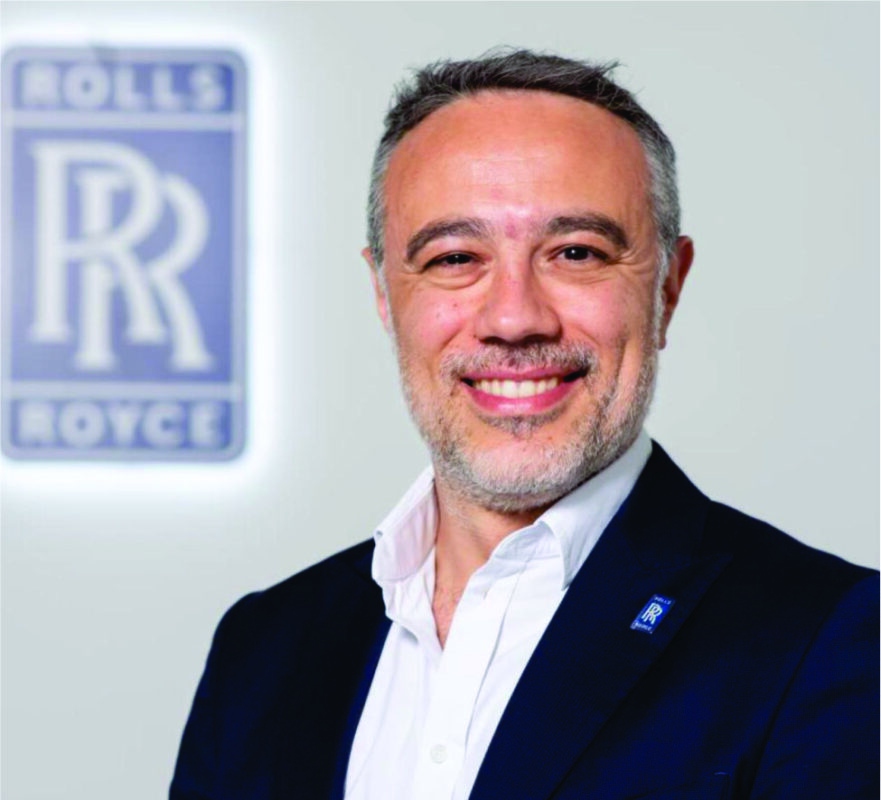
Mr. Omar Ali Adib, Senior Vice President, Middle East And Africa at Rolls-Royce, a seasoned aerospace executive, in this exclusive interview with Aviation & Allied Business Journal discussed issues on the demand for aircraft engine in Africa, supply chain issues, Sustainable Aviation Fuel, skilled workforce shortage in the African aviation industry and Rolls-Royce’s footprint in the African aviation market, amongst other topics.
Q: Can you share insight on Rolls-Royce’s footprint in the African aviation market?
A: Rolls-Royce has been supporting aviation in Africa for decades, working alongside airlines on the continent since the earliest generations of jet aircraft entered service. Over that time, we have developed a deep understanding of the operating environment across Africa – from high-cycle regional routes to long-haul intercontinental operations – and the importance of reliability, durability and consistent support in often complex conditions.
Today, Rolls-Royce powers a broad cross-section of Africa’s commercial fleet, from widebody aircraft such as the Airbus A330neo, A350 and Boeing 787, through to regional aircraft including Embraer platforms. We support more than 35 airline customers across Africa, with hundreds of aircraft powered by our engines in service, backed by our global services network and long-term agreements such as TotalCare®.
This long-standing presence, combined with our focus on performance, service and partnership, means we are not only supporting Africa’s aviation growth today, but helping to build the resilience and capability of the sector for the future.
Q: From an engine manufacturer’s perspective, what is your projection for the African market in terms of aircraft engine demand?
A: Africa has a relatively small fleet and a fragmented route network with low passenger volumes; however, we believe the region will be one of the fastest-growing aviation markets globally, a view shared by our airframe partners. Over the next 20 years, we believe the market will require between 1,200 and 1,460 new aircraft. With route expansions and strong replacement cycles supporting an ever more connected Africa, we expect the majority of growth to be dominated by the narrow-body class of aircraft, with roughly one-fifth of demand dedicated to widebody, including freighters, that are imperative for long-haul routes.
Q: IATA recently reported that airframe production is outpacing engine production, which has resulted in newly completed airframes being parked until engines are available. Why is this so? And how is Rolls-Royce working to alleviate the shortage of engines and overcome supply chain issues?
A: Supply chain disruption is an industry-wide challenge. Aircraft production has many dependencies, including engine supply.
We’ve already introduced measures that allow us to respond more quickly to these issues, such as integrating our Procurement and Supplier Management teams, sharing our own raw material stocks to tackle shortages, and hiring people to work in supplier organisations; one of our most impacted suppliers currently has almost 50 Rolls-Royce supply chain staff dedicated to driving their recovery. This has resulted in increased supplier output and improved availability of parts across our Trent engine programmes.
Q: Without new engines, are we not setting backwards ambitions for sustainable aviation?
A: No. Fuel efficiency is the most effective and quickest way of being more sustainable because it is an immediate reduction in emissions. To this end, we are continuously improving the durability and efficiency of our engines in service, and this is one of the many reasons why our customers choose us. For example, we recently introduced Enhanced Performance (EP) upgrades on the Trent XWB-84, delivering further gains in fuel efficiency and CO? reduction, along with improved durability. These upgrades across the Trent family of engines are available not only on new engines but can be introduced into the existing fleet, ensuring customers benefit immediately.
Our current Trent engines are around 15% more efficient than the first generation, and we expect to deliver around 80% improvements in durability across the fleet in the coming years. This matters because extended “time on wing” means engines stay in service longer before requiring maintenance, reducing the need for replacement parts, lowering resource consumption and improving overall lifecycle efficiency – an often overlooked but critical aspect of sustainable aviation.
At the same time, Rolls-Royce company continues to develop the UltraFan, our next-generation engine architecture designed to deliver around 25% greater fuel efficiency compared with the first Trent engines. Many of the technologies being proven through UltraFan – including advanced materials and a new geared architecture – can also be transferred into future production engines.
Plus, all Rolls-Royce engines are certified to operate on 100% sustainable aviation fuel (SAF). This means airlines can immediately reduce lifecycle emissions without waiting for entirely new aircraft or engine programmes.
In short, sustainable aviation is not dependent on a single step change. It is being delivered through continuous improvement of engines in service, next-generation technologies such as UltraFan, and the adoption of sustainable fuels-all of which Rolls-Royce is advancing in parallel.
Q: Many African airlines (Egyptair, Air Algérie, Air Côte d’Ivoire) have taken deliveries of aircraft powered by Rolls-Royce engines, this is in addition to the existing Embraer 145/135 operators. What support do you offer these operators, considering the weak MRO infrastructure on the continent?
A: Rolls-Royce supports African operators through its global maintenance and services network, with many engines operating under TotalCare®, our long-term service agreement that provides predictable maintenance, access to spare parts and engines, and continuous engine health monitoring throughout the engine’s life.
Through digital diagnostics and coordinated maintenance planning, we can identify potential issues early and help our African customers maximise aircraft availability.
For smaller or growing operators, we offer SelectCare, a flexible suite of service options that allows airlines to choose the level of maintenance support that best suits their operational needs and scale.
This support is underpinned by Rolls-Royce’s expanding global MRO network, including the development of a new Trent engine MRO facility with Turkish Technic in Istanbul to support the Trent engines powering aircraft such as the Airbus A350 and A330neo.
Together with our wider network of Rolls-Royce and approved partner facilities, this ensures airlines – wherever they operate – have access to reliable, world-class engine maintenance and support.
Q: Global shortage of skilled aviation technicians is a major challenge for the industry. IATA specifically reported a shortage of skilled manpower in engine manufacturing. What measures are you taking to ensure adequate manpower for the work at Rolls Royce?
A: The aviation industry is experiencing strong global growth, and, like many advanced engineering sectors, ours requires a steady pipeline of highly skilled technicians and engineers. Rolls-Royce addresses this through long-established apprenticeship programmes, graduate training schemes and partnerships with universities and technical institutes, helping to develop the next generation of aerospace specialists.
We also invest in training and upskilling our existing workforce, ensuring employees continue to develop the skills needed to support modern and future engine programmes and our global services network.
Today, around 20,000 people work across Rolls-Royce’s Civil Aerospace business worldwide, spanning engineering, manufacturing and services. This global team supports airlines and partners across the full lifecycle of our engines-from design and production to long-term maintenance and operational support.
Q: How are you leveraging technologies such as AI to improve the manufacturing and performance of your engines?
A: Rolls-Royce has long used advanced data and digital technologies to improve the performance and reliability of its engines. Through our Engine Health Monitoring capability, engines in service continuously transmit operational data that is analysed using advanced analytics and AI-enabled tools, enabling our teams to identify trends, anticipate maintenance needs and help airlines maximise aircraft availability.
We are also transforming how inspections are carried out through technologies such as the Intelligent Borescope, which uses AI-enabled image analysis to automate and standardise inspections. Working closely with airlines such as EgyptAir, we have trained maintenance inspectors to become experts in advanced digital borescope equipment, reducing reliance on manual processes and enabling faster, more consistent assessments. By building a detailed, data-driven understanding of each individual engine-its condition, operating history and prior inspections-maintenance decisions can be based on actual need rather than fixed intervals. This reduces downtime while strengthening reliability. AI-enabled automation can cut inspection data processing time by up to 95%, significantly improving efficiency and time on wing.
The insights gained from these technologies feed directly back into our design and manufacturing processes, helping us refine components, improve durability and continuously enhance engine performance. In this way, digital technologies and AI are improving both how engines are built and how they perform in service-supporting safer, more efficient and more sustainable aviation.
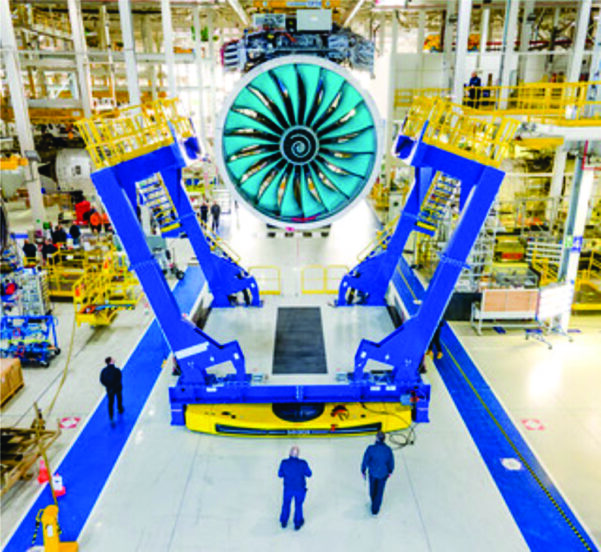
Rolls-Royce Facility
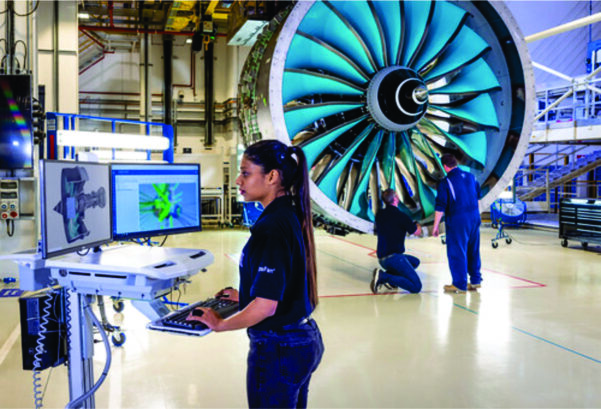
All Rolls-Royce engines are certified to operate on 100% Sustainable Aviation Fuel (SAF)