

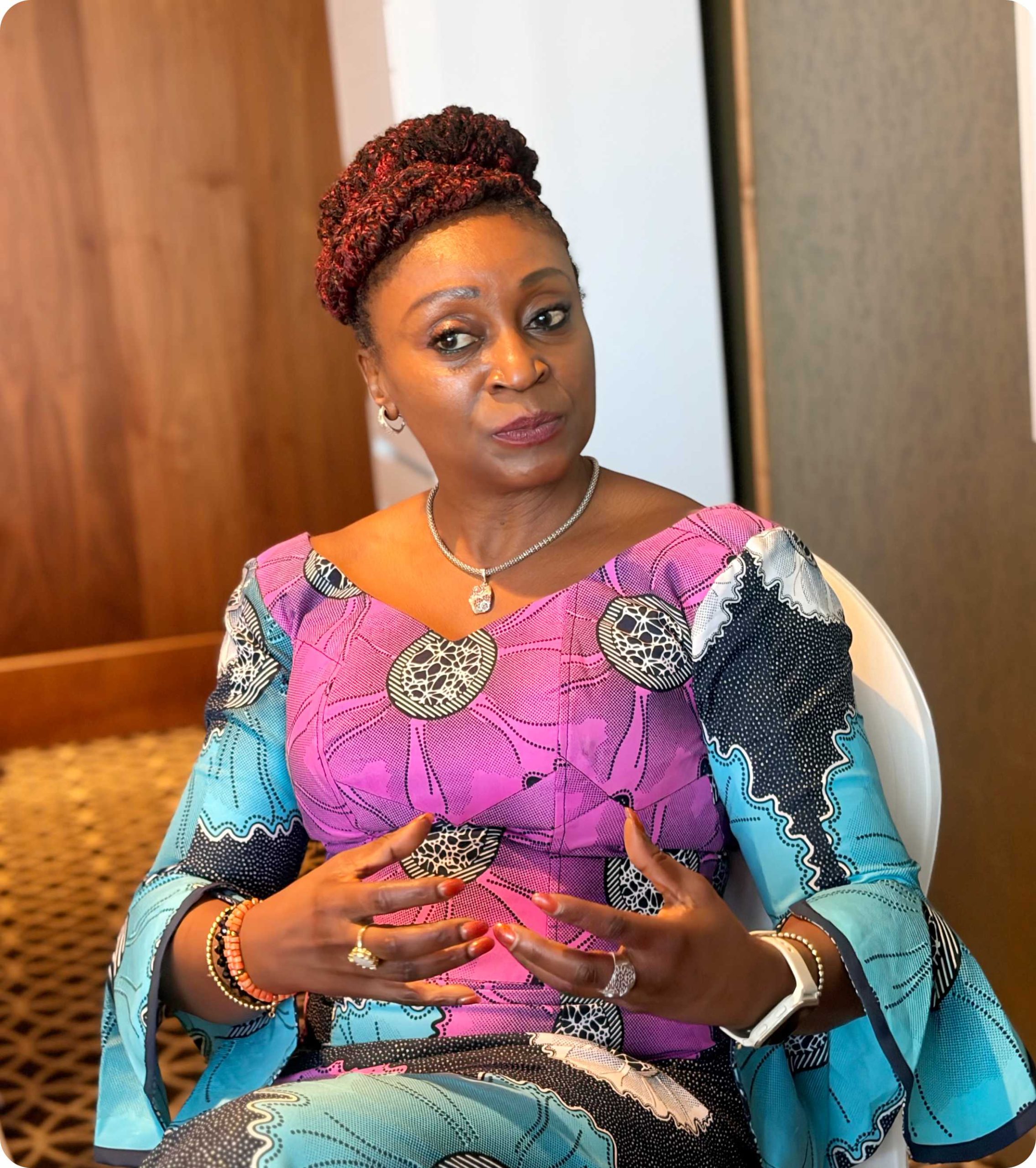
Ms. Adefunke Adeyemi is the driving force behind a new era of collaboration in African aviation. As Secretary General of the African Civil Aviation Commission since 1 September 2022, she has moved AFCAC from policy to practice. Ms Adeyemi has brought significant energy and innovation to Africa’s search for greater air connectivity and sustainable air transport. From the introduction of SAATM PIP to the various Airshows across countries and regions in Africa, her bite-sized approach to improving air connectivity in Africa has been catching on. No less because she has consistently employed data to demonstrate that Africa’s air connectivity continues to improve.
Her reappointment in November 2024 for a second term, (1 September 2025 to 31 August 2028), reflected the confidence of AFCAC’s Bureau and AU Member States in her leadership and performance. Under Ms. Adeyemi’s leadership, AFCAC has sharpened its mandate to promote safe, secure, sustainable, and connected air transport across the continent.
Energetic and innovative, she led AFCAC to deliver the inaugural African Air Transport Convention and Expo in June 2026, bringing together Presidents, Ministers of transport, finance, trade, airlines, airports, regulators, and development partners to align on SAATM implementation, cost reduction, cargo, and mobility.
Prior to AFCAC, Ms. Adeyemi was Regional Director of External Affairs & Sustainability for Africa at IATA, where her passion for SAATM earned her the sobriquet ‘Madam SAATM’. She became a leading advocate for SAATM and a Private Sector Champion of the African Continental Free Trade Area. That experience shaped her approach at AFCAC: bringing together government, industry, and development partners to deliver reforms.
With the Convention and Expo now concluded, Ms. Adeyemi’s focus is on translating the outcomes into action: full SAATM implementation, lower cost of travel, modernized infrastructure, efficient cargo corridors, and greater mobility for African citizens. Her leadership also positions AFCAC as the unifying voice for aviation under AU Agenda 2063.
Ms. Adeyemi is not only positioning African aviation for greater economic impacts, she has keyed into the drive for gender diversity and empowering the Next Generation of Aviation Professionals in Africa through the AWAYA platform.
Africa Is Moving From Commitment To Delivery
Q: Many industry stakeholders did not attend the Convention in Lomé. What should they hold on to as the major outcomes of the Convention and the Lomé Declaration?
A: The message from Lomé is clear: Africa is moving from commitment to delivery.
The Convention was held in Togo for a strategic reason. Togo is the SAATM Champion State, and His Excellency the President of the Council of the Republic of Togo has provided strong political leadership for the rapid realisation of the Single African Air Transport Market. That political leadership is vital because SAATM is not just an aviation project. It is an African integration initiative.
The Convention was organised around five priorities: accessibility, connectivity, affordability, sustainability, and safety, security and capacity. Accessibility means African States opening their markets and making it easier for Africans to move. Connectivity involves turning those open markets into actual routes, frequencies, and services.
Affordability addresses the cost of travel, including excessive taxes, fees, and charges. Sustainability encompasses investment, infrastructure, financial viability, and environmental responsibility. Finally, safety, security, and capacity remain the foundation on which everything else must rest.
The Lomé Declaration outlines these priorities and transforms them into a practical delivery plan. It advocates for more comprehensive implementation of the Yamoussoukro Decision and SAATM, reduction of aviation costs, development of feasible routes, reforms to facilitate operations, bankable infrastructure projects, stronger human capital, cleaner aviation energy, improved data, and a more empowered AFCAC.
Therefore, the Lomé outcome is not just a communiqué to be filed away; it is a continental work programme. The real challenge now is implementation, with AFCAC taking the lead in follow-up efforts alongside Member States and partners.
Q: You mentioned a six-month timeline to report back to the SAATM Champion President. Which areas will be covered in that report?
A: The six-month report will be a delivery report, not a ceremonial update. We will report on Africa’s progress in implementing the Yamoussoukro Decision and SAATM. This includes aligning bilateral air service agreements, operationalising fifth freedom rights, airline designation, market access, and removing practical barriers that still hinder African carriers from operating freely across the continent. We will also report on the regulatory framework that underpins liberalisation. This includes competition rules, consumer protection, dispute resolution, economic regulation, and the ongoing modernisation of the Yamoussoukro Decision framework to ensure it aligns with current realities.
Beyond market access, we will report on infrastructure pipelines, aviation investment opportunities, targeted technical assistance, safety and security support, training, capacity building, facilitation, visa openness, connectivity improvements, and affordability measures. The point is simple: we want Heads of State and Ministers to see what has progressed, what remains blocked, and where political intervention is needed.
AFCAC’s role is to present evidence. Not slogans. Not assumptions. Evidence.
Q: Affordability is one of the most difficult issues in African aviation. Can anything meaningful be achieved within six months on taxes, fees and charges?
A: Yes, but we must be practical. Africa is not one market in administrative terms. We have 54 States, different fiscal systems, different airport structures, different aviation charges, and different economic realities. So, the right approach is not to impose a one-size-fits-all model. The right approach is to identify what works, document it, and scale it.
In West Africa, ECOWAS Heads of State have already made a major decision on aviation taxes, fees, and charges, including the elimination of certain non-aviation taxes and a targeted reduction in ticket-related taxes. This is significant because it demonstrates that affordability is no longer just an industry concern. It is now a political and economic priority. AFCAC will utilise the next six months to monitor implementation, identify early adopters, document practical models, and support replication across regions. We will also employ the Continental Framework on Taxes, Fees and Charges to guide States towards more transparent, consultative, cost-effective, and growth-oriented charging systems.
The question is not whether governments need revenue. They do. The real question is whether aviation charges are structured in a way that expands or constrains the market. A smaller, heavily taxed market benefits no one. A growing aviation sector enhances tourism, trade, employment, investment, and ultimately, public revenue.
Q: Throughout the Convention, you spoke about bankable projects and project preparation. What is driving this focus?
A: For too long, aviation in Africa has been regarded mainly as a cost centre. We must reposition it as a development asset.
Airports, cargo terminals, cold-chain logistics, air navigation systems, aviation security, digital platforms, training facilities, maintenance centres, and sustainable aviation fuel projects are not merely theoretical aviation issues. They are investment opportunities. They support trade, tourism, agriculture, e-commerce, pharmaceuticals, manufacturing, logistics, and regional value chains.
But investors and development finance institutions do not fund slogans. They fund prepared projects. They require credible feasibility studies, risk allocation, governance structures, revenue models, regulatory clarity, and bankable pipelines.
That is why AFCAC, in collaboration with partners, has conducted infrastructure gap analysis across African States and why the Convention deliberately brought together governments, development finance institutions, investors, airports, airlines, industry, and technical partners in the same room. Our goal was to transition from “Africa needs infrastructure” to “here are the projects, here are the gaps, here are the partners, and here is the pathway to financing.”
That is a different conversation. And frankly, it is the conversation African aviation must now have.
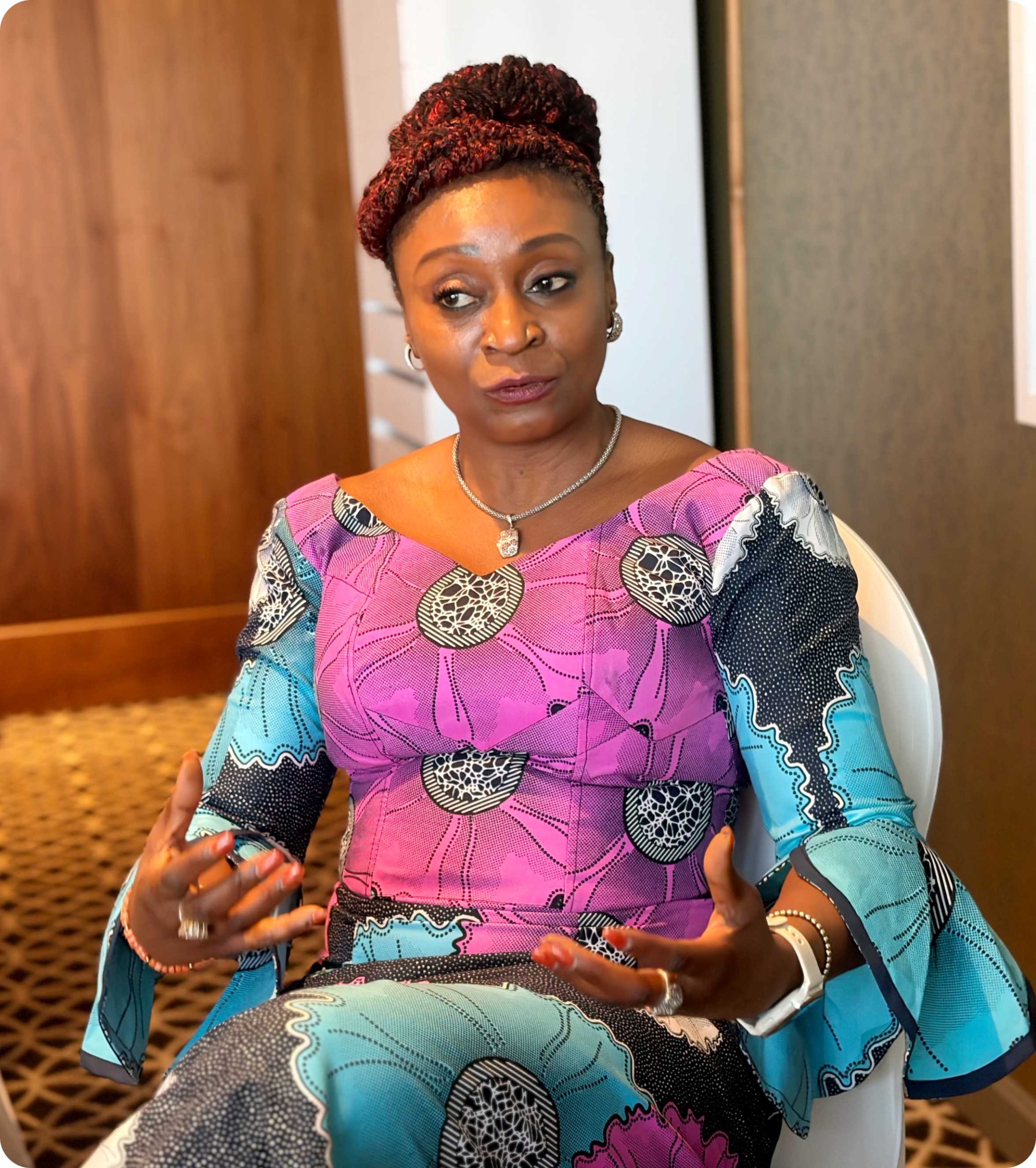
Ms. Adefunke Adeyemi, African Civil Aviation Commission (AFCAC)
Q: Some participants argued that infrastructure is important, but human resources are even more fundamental. What is AFCAC doing about aviation human capital?
A: They are correct. Infrastructure without people is merely concrete, steel, and technology. Aviation depends on competence.
Safety, security, and capacity form the foundation of our industry. Africa requires pilots, engineers, air traffic controllers, safety inspectors, security experts, economic regulators, data analysts, airport specialists, environmental experts, aviation lawyers, project finance professionals, and future-ready managers.
AFCAC’s role is to coordinate capacity development across the continent. We work with Member States to identify needs, prioritise them, and organise training through African training institutions and international partners. Over the past two years, more than 2,000 African aviation professionals have benefited from AFCAC-supported capacity-building initiatives. We have also established partnerships with institutions and countries beyond Africa, including in aviation management, safety, security, regulation, and postgraduate training.
But we must go further. Africa’s aviation growth will only be sustainable if we develop a pipeline of skilled professionals, paying deliberate attention to youth, women, technology, and the next generation of aviation leaders. Human capital is not an accessory to SAATM. It is one of its essential tools.
Q: On Sustainable Aviation Fuel, what is AFCAC doing with the African Union to support the development of a SAF ecosystem in Africa?
A: Africa must not remain a spectator in the worldwide aviation energy transition. AFCAC, operating within the African Union framework, has supported the development of a continental strategy for Sustainable Aviation Fuel and Lower Carbon Aviation Fuel. The strategy is based on four pillars: policy framework, institutional strengthening and capacity building, technical assessment, and resource mobilisation.
This matters because SAF is not only an environmental issue, but also an industrial, agricultural, technological, and investment opportunity. Africa possesses significant feedstock potential. However, potential alone is insufficient. We require policy certainty, sustainability safeguards, certification pathways, project preparation, technical partnerships, financing, and African participation across the entire value chain.
Our objective is very clear: Africa’s resources must create value for Africa. We want African States to participate not only as suppliers of raw materials, but as producers, processors, innovators and beneficiaries of the future aviation energy economy.
The move towards greener aviation energy is underway. AFCAC believes that Africa needs to play a role in shaping that shift, rather than just adapting to decisions made elsewhere.
Q: Thirty-eight countries have signed up to SAATM, while sixteen have not. What is AFCAC doing about the remaining States?
A: No African State should be left behind. SAATM launched with 11 States in 2018. Today, 38 States have signed on, representing most of Africa’s aviation market. That is true progress. But signing is not the end goal. Implementation is.
Our approach has two main tracks. First, we are collaborating with the 38 participating States to deepen implementation. This involves addressing market access, aligning bilateral agreements, securing fifth freedom rights, designation, facilitation, affordability, and route development. Second, we are stepping up advocacy with the remaining 16 States by demonstrating the evidence of what SAATM can achieve.
Countries do not join transformative initiatives solely due to pressure. They participate when the advantages become evident. That is why AFCAC has produced country-level advocacy materials highlighting the economic, connectivity, tourism, trade, and employment benefits of SAATM. Our goal is to make the value proposition unmistakably clear.
Q: Many industry stakeholders did not attend the Convention in Lomé. What should they hold on to as the major outcomes of the Convention and the Lomé Declaration?
A: The message from Lomé is clear: Africa is moving from commitment to delivery.
The Convention was held in Togo for a strategic reason. Togo is the SAATM Champion State, and His Excellency the President of the Council of the Republic of Togo has provided strong political leadership for the rapid realisation of the Single African Air Transport Market. That political leadership is vital because SAATM is not just an aviation project. It is an African integration initiative.
The Convention was organised around five priorities: accessibility, connectivity, affordability, sustainability, and safety, security and capacity. Accessibility means African States opening their markets and making it easier for Africans to move. Connectivity involves turning those open markets into actual routes, frequencies, and services.
Affordability addresses the cost of travel, including excessive taxes, fees, and charges. Sustainability encompasses investment, infrastructure, financial viability, and environmental responsibility. Finally, safety, security, and capacity remain the foundation on which everything else must rest.
The Lomé Declaration outlines these priorities and transforms them into a practical delivery plan. It advocates for more comprehensive implementation of the Yamoussoukro Decision and SAATM, reduction of aviation costs, development of feasible routes, reforms to facilitate operations, bankable infrastructure projects, stronger human capital, cleaner aviation energy, improved data, and a more empowered AFCAC.
Therefore, the Lomé outcome is not just a communiqué to be filed away; it is a continental work programme. The real challenge now is implementation, with AFCAC taking the lead in follow-up efforts alongside Member States and partners.
Q: You mentioned a six-month timeline to report back to the SAATM Champion President. Which areas will be covered in that report?
A: The six-month report will be a delivery report, not a ceremonial update. We will report on Africa’s progress in implementing the Yamoussoukro Decision and SAATM. This includes aligning bilateral air service agreements, operationalising fifth freedom rights, airline designation, market access, and removing practical barriers that still hinder African carriers from operating freely across the continent. We will also report on the regulatory framework that underpins liberalisation. This includes competition rules, consumer protection, dispute resolution, economic regulation, and the ongoing modernisation of the Yamoussoukro Decision framework to ensure it aligns with current realities.
Beyond market access, we will report on infrastructure pipelines, aviation investment opportunities, targeted technical assistance, safety and security support, training, capacity building, facilitation, visa openness, connectivity improvements, and affordability measures. The point is simple: we want Heads of State and Ministers to see what has progressed, what remains blocked, and where political intervention is needed.
AFCAC’s role is to present evidence. Not slogans. Not assumptions. Evidence.
Q: Affordability is one of the most difficult issues in African aviation. Can anything meaningful be achieved within six months on taxes, fees and charges?
A: Yes, but we must be practical. Africa is not one market in administrative terms. We have 54 States, different fiscal systems, different airport structures, different aviation charges, and different economic realities. So, the right approach is not to impose a one-size-fits-all model. The right approach is to identify what works, document it, and scale it.
In West Africa, ECOWAS Heads of State have already made a major decision on aviation taxes, fees, and charges, including the elimination of certain non-aviation taxes and a targeted reduction in ticket-related taxes. This is significant because it demonstrates that affordability is no longer just an industry concern. It is now a political and economic priority. AFCAC will utilise the next six months to monitor implementation, identify early adopters, document practical models, and support replication across regions. We will also employ the Continental Framework on Taxes, Fees and Charges to guide States towards more transparent, consultative, cost-effective, and growth-oriented charging systems.
The question is not whether governments need revenue. They do. The real question is whether aviation charges are structured in a way that expands or constrains the market. A smaller, heavily taxed market benefits no one. A growing aviation sector enhances tourism, trade, employment, investment, and ultimately, public revenue.
Q: Throughout the Convention, you spoke about bankable projects and project preparation. What is driving this focus?
A: For too long, aviation in Africa has been regarded mainly as a cost centre. We must reposition it as a development asset.
Airports, cargo terminals, cold-chain logistics, air navigation systems, aviation security, digital platforms, training facilities, maintenance centres, and sustainable aviation fuel projects are not merely theoretical aviation issues. They are investment opportunities. They support trade, tourism, agriculture, e-commerce, pharmaceuticals, manufacturing, logistics, and regional value chains.
But investors and development finance institutions do not fund slogans. They fund prepared projects. They require credible feasibility studies, risk allocation, governance structures, revenue models, regulatory clarity, and bankable pipelines.
That is why AFCAC, in collaboration with partners, has conducted infrastructure gap analysis across African States and why the Convention deliberately brought together governments, development finance institutions, investors, airports, airlines, industry, and technical partners in the same room. Our goal was to transition from “Africa needs infrastructure” to “here are the projects, here are the gaps, here are the partners, and here is the pathway to financing.”
That is a different conversation. And frankly, it is the conversation African aviation must now have.
Q: Some participants argued that infrastructure is important, but human resources are even more fundamental. What is AFCAC doing about aviation human capital?
A: They are correct. Infrastructure without people is merely concrete, steel, and technology. Aviation depends on competence.
Safety, security, and capacity form the foundation of our industry. Africa requires pilots, engineers, air traffic controllers, safety inspectors, security experts, economic regulators, data analysts, airport specialists, environmental experts, aviation lawyers, project finance professionals, and future-ready managers.
AFCAC’s role is to coordinate capacity development across the continent. We work with Member States to identify needs, prioritise them, and organise training through African training institutions and international partners. Over the past two years, more than 2,000 African aviation professionals have benefited from AFCAC-supported capacity-building initiatives. We have also established partnerships with institutions and countries beyond Africa, including in aviation management, safety, security, regulation, and postgraduate training.
But we must go further. Africa’s aviation growth will only be sustainable if we develop a pipeline of skilled professionals, paying deliberate attention to youth, women, technology, and the next generation of aviation leaders. Human capital is not an accessory to SAATM. It is one of its essential tools.
Q: On Sustainable Aviation Fuel, what is AFCAC doing with the African Union to support the development of a SAF ecosystem in Africa?
A: Africa must not remain a spectator in the worldwide aviation energy transition. AFCAC, operating within the African Union framework, has supported the development of a continental strategy for Sustainable Aviation Fuel and Lower Carbon Aviation Fuel. The strategy is based on four pillars: policy framework, institutional strengthening and capacity building, technical assessment, and resource mobilisation.
This matters because SAF is not only an environmental issue, but also an industrial, agricultural, technological, and investment opportunity. Africa possesses significant feedstock potential. However, potential alone is insufficient. We require policy certainty, sustainability safeguards, certification pathways, project preparation, technical partnerships, financing, and African participation across the entire value chain.
Our objective is very clear: Africa’s resources must create value for Africa. We want African States to participate not only as suppliers of raw materials, but as producers, processors, innovators and beneficiaries of the future aviation energy economy.
The move towards greener aviation energy is underway. AFCAC believes that Africa needs to play a role in shaping that shift, rather than just adapting to decisions made elsewhere.
Q: Thirty-eight countries have signed up to SAATM, while sixteen have not. What is AFCAC doing about the remaining States?
A: No African State should be left behind. SAATM launched with 11 States in 2018. Today, 38 States have signed on, representing most of Africa’s aviation market. That is true progress. But signing is not the end goal. Implementation is.
Our approach has two main tracks. First, we are collaborating with the 38 participating States to deepen implementation. This involves addressing market access, aligning bilateral agreements, securing fifth freedom rights, designation, facilitation, affordability, and route development. Second, we are stepping up advocacy with the remaining 16 States by demonstrating the evidence of what SAATM can achieve.
Countries do not join transformative initiatives solely due to pressure. They participate when the advantages become evident. That is why AFCAC has produced country-level advocacy materials highlighting the economic, connectivity, tourism, trade, and employment benefits of SAATM. Our goal is to make the value proposition unmistakably clear.
The goal is not merely to boost the number of signatures. The aim is to develop a viable African air transport market that advantages all areas of the continent.
Q: Finally, data. Across the industry, stakeholders continue to complain about the lack of reliable aviation data in Africa. Why is this still difficult, and what is AFCAC doing about it?
A: Data is one of the most important foundations of implementation. For many years, African aviation faced fragmented data, inconsistent reporting, and, in some cases, a trust gap regarding information sharing. That is changing. AFCAC is developing reliable continental data systems that can support evidence-based policy, investment, regulation, and monitoring.
We are developing the African Program for Aviation Data (APAD) and creating dashboards across key areas, including SAATM implementation, connectivity, cargo, infrastructure, and safety. The aim is to establish a reliable source of African aviation intelligence, owned and trusted by African States and valuable to industry, investors, and partners.
This is not just about collecting numbers; it is about transforming how decisions are made. Whether we want to cut costs, open routes, fund infrastructure, enhance safety, bolster cargo, or oversee SAATM implementation, we need dependable data.
Africa cannot establish a modern aviation market with outdated information. AFCAC is committed to bridging that gap.

Ms. Adefunke Adeyemi awarding the SAATM President