
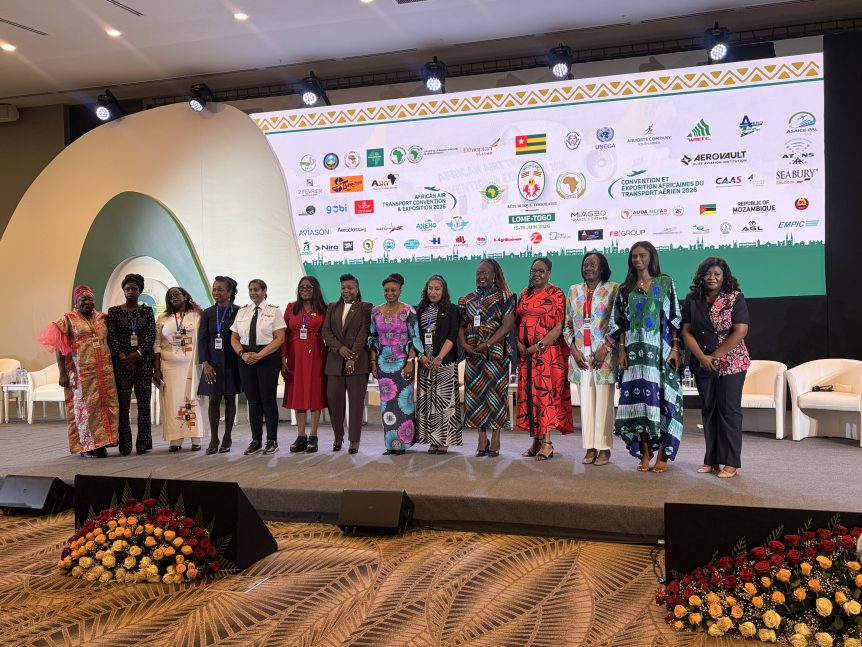
Leaders and representatives of the African Women and Youth in Aviation (AWAYA) have called for urgent investment in skills development, mentorship, scholarships and inclusive policies to ensure the continent has the workforce needed to support its rapidly expanding aviation industry.
Opening the discussion during a panel discussion at the day four of the maiden edition of the African Air Transport Convention & Expo 2026 which focused on “Women, Youth and Skills Development in Air Transport”, Mrs. Olive Lumonya, Deputy Director General of Uganda Civil Aviation Authority (CAA) and AWAYA Chairperson highlighted the persistent underrepresentation of women in aviation leadership and technical roles. According to data presented during the session by Mrs. Lumonya, more than 10% of women are represented among aviation CEOs, air transport pilots and maintenance technicians, 11-20% women represented among airport mangers, ATC, dispatchers and aerospace engineers and less than 20% representation primarily concentrated in flight attendant roles.”
She said: “We cannot continue talking about diversity, equity and inclusion without taking action. We must commit ourselves to creating opportunities that allow women and young people to participate fully in the aviation sector.”
The AWAYA Chairperson noted that, since its establishment in 2023, “AWAYA has expanded rapidly across the continent, bringing together aviation professionals, regulators, airlines and training institutions to promote opportunities for women and youth.”
The organization has facilitated more than 200 scholarships and fellowships and supported over 600 training opportunities through partnerships with industry stakeholders.
The discussion also focused on the need to modernize aviation training systems across Africa. Mrs. Rejoice Ndudinachi, President Women in Aviation Nigeria argued that many aviation training institutions continue to operate with outdated curriculum that do not reflect the realities of modern aviation.
“Aviation today is no longer limited to pilots and crews alone. We must train young professionals in emerging areas such as AI, drone technology, data management systems and advanced safety management”, she said.
Many African training centres, she said, still operate without adequate simulators and modern facilities, while experienced instructors are nearing retirement with insufficient numbers of younger professionals being prepared to replace them.
“We need instructor development programmes, stronger investment in training infrastructure and practical mentorship that connects students directly with operational environments,” she said.
Adding a broader industry perspective, Maureen Kahonge, Director, Commercial & Communications, African Airlines Association (AFRAA) stated that “Africa does not have a talent shortage. Africa has a pipeline shortage,” she said.
Ms. Kahonge pointed to the continent’s demographic advantage, noting that more than half of Africa’s population is under the age of 25. “We are sitting on a gold mine of human capital, the question is whether we are creating the systems and opportunities needed to develop that potential.”
She reiterated that Africa’s aviation sector is expected to experience significant growth over the next 15 to 20 years and said: “The traffic will grow. More aircraft will fly. The question is who will fly them, maintain them and manage the systems that support them.”
Ms. Kahonge noted that one of the greatest barriers to building that workforce is financing and to address this challenge, she said AFRAA has established an African Airline Training Fund aimed at supporting students pursuing careers in aviation through scholarships, subsidized training and financing mechanisms.
“We are discussing with Development Finance Institutions, OEMs and industry partners to create funding solutions that will allow more young people to access pilot training, engineering programmes and other technical fields,” Kahonge said.
She also stressed the importance of mentorship, citing her own career progression as an example of how coaching and professional guidance can open doors for women in leadership.
The Sierra Leone Civil Aviation Authority Director General, Mrs. Musayeroh Barrie concluded with a call for aviation education, inclusion and access to become strategic priorities across the continent.
She urged governments, regulators, airlines and development partners to work together to remove financial barriers, expand scholarship opportunities and ensure equal access to careers in aviation.