

Helicopters have come to stay as indispensable tools in aviation’s contribution to emergency response, emergency medical services, law enforcement, and business travel, amongst other uses. It has found more uses in Africa’s perennially bourgeoning extractive industry, oil and gas operations and other hard to reach environments. We review in this article the 2024/2025 Africa Helicopter Market Analysis by leading helicopter trading company Rotortrade.
Rotortrade in their market analysis notes that though Africa’s helicopter market is amongst the “smallest in terms of operational fleet size” it sees “growth potential in some nations like Nigeria, South Africa, and Kenya.”
Trends
Rotortrade identifies local content trends in the oil and gas sector which influences operations of International Oil companies. In Nigeria for instance government regulation is driving the participation of local companies in the oil and gas sector. The Report notes other trends: “Localization trends in the oil and gas industry, the gradual shift away from Russian-manufactured helicopters for humanitarian flights, and the increased receptivity to second-hand Western aircraft all point in the direction of a change in procurement patterns as well as operational strategy.”
The Report notes that though the problems are considerable-from infrastructure limitations in terms of maintenance to budget constraints, the possibilities for well-organized, long-term solutions are also considerable.
Regional Drivers
Helicopter activity in Africa is concentrated in a series of core markets noting that “South Africa, Nigeria, and Kenya form the hub of regional activity.” Nevertheless, each market has their own peculiar challenges. “South Africa boasts the most advanced infrastructure and a mix of civil and parapublic utilization that is reasonably well balanced. Nigeria is seeing a fundamental change in the oil and gas industry with a drive for localization that is creating fresh demand for rotary assets. Kenya, on the other hand, is an East African logistics center but is subject to an uncertain fiscal and regulatory environment”, says the report. Aurelien Blanc, Rotortrade’s Executive Director and APAC, Middle East, and Africa Head of Region’s advice on the African market is: “You have to be here; you have to invest the time. You can’t do it from the outside and impose your way of doing business. There’s an African way.”
In Nigeria, the trend is internalization of support for offshore production. As international oil companies’ hand over operational control to local companies, the ensuing capacity gap will need helicopters to bridge, adds the report.
Fleet Composition
In terms of fleet, the report notes that Africa’s current operational helicopter fleet reflects both the established legacy platforms it is based on and the limitations of the continent’s infrastructure. It says “The African fleet favours older aircraft, especially in turbine platforms that are utilized in utility, law enforcement, and offshore support. The Bell 412 and other established types are still in favour because they’re easy to fly and there’s extensive maintenance experience, even though they’re no longer state-of-the-art.”
Another helicopter of note in Africa is the Robinson. According to Blanc “The Robinson rules the piston class, with main use in pilot training schools and initial private ownership. Although of lesser capital cost, these aircraft are restricted in their African operational use by payload, range, and maintenance considerations.”
In January 2026, Airbus Helicopters announced it “has been awarded a contract by the Ministry of Defence of Ghana for two H175Ms, one ACH175 and one ACH160. The H175Ms will be used as multi-mission helicopters for transport, search and rescue, emergency medical services and disaster relief. The ACH175 and ACH160 will be operated for transport”
In March 2026, Airbus also announced that “Bristow Group Inc. has officially received the first two of five Airbus H160 medium-twin helicopters leased from Milestone Aviation Group” for their Nigerian operations. Airbus said: “With three more H160s scheduled for delivery to complete the five-aircraft agreement, Bristow is positioned to operate one of the most modern and capable fleets in Africa, supporting mission-critical services for the energy industry.”
Government & Humanitarian Demand
The report posits: “A significant trend in the past few years has been the move away from Russian-built platforms by large humanitarian agencies. The conflict in Ukraine has witnessed agencies like the UN and World Food Program acquire or contract more Western aircraft. However, the transition has been slowed by cuts in U.S. funding, which have decelerated fleet replacement initiatives and kept the reliance higher on older Western platforms like the Bell 412.”
Identifying government VIP and military missions as “increasingly big purchasers of used aircraft”, the report added that “Several countries, for instance, recently acquired several Airbus and Leonardo for transport and security purposes. These kinds of purchases frequently are funded through government-supported credit facilities or letter-of-credit payment terms.” Blanc argued that “Government and VIP transport is likely more resilient than the civilian market in most African nations.”
Challenges In the African Helicopter Sector
Maintenance
Over time, helicopter operations in Africa have been hampered by maintenance issues. Some of these include infrastructure difficulties, financial limitations related to availability of capital to finance maintenance. The Report notes: “One of the most important structural bottlenecks in Africa is the absence of dependable maintenance, repair, and overhaul (MRO) infrastructure. Aircraft are often grounded for weeks at a time because of a lack of spare parts or qualified technicians.” Blanc adds that “Getting the helicopter in is one thing – keeping it in the air is a far greater challenge.”
Regulation
Blanc says regulatory hurdles also influence the shaping of the market. Foreign operators in the majority of nations must go into partnership agreements with national carriers or majority-shareholding agreements, which make operations more complex. The uncertain import taxes on helicopters in Kenya, such as re-imposition of luxury taxes, has had a direct impact on fleet modernization cycles and acquisition.
Finance
Regarding finance, the Rotortrade Report says “Western lessors and banks perceive Africa as high-risk. South African banks finance some local transactions, but outside of South Africa, there is not much financing available. Some operators are looking to project finance structures, particularly in Nigeria, where escrow arrangements linked to oil company revenues are gaining popularity.”
Strategic Development & Local Presence
In Blanc’s opinion, ground presence is not a choice – it’s a strategic imperative. Absent proximity to the client base, familiarity with local procurement traditions, and in-country technical support, there will be no productive business conducted in Africa.
For Rotortrade, plans exist to establish new offices in Johannesburg, Casablanca, and Nairobi. These offices would ultimately offer MRO services, a customer interface, and inventory pooling to minimize logistics issues and enhance response time.
“Leonardo for example has operated successfully in Africa because they have had the same individuals on the ground within the continent for decades. They are Italian, yet they are African in how they conduct business,” added Blanc.
Over the long term, formal turnkey solutions – i.e., sales of aircraft and maintenance and limited operational support – are viewed as the way to build relationships and achieve long-term fleet modernization.
Sustainability Outlook
Blanc believes sustainability is not yet the market driver in Africa. Governments and operators, he says, are less concerned with environmental performance than with aircraft cost, serviceability, and mission fit. Sustainable Aviation Fuel (SAF) is essentially unavailable, and there is little interest in eVTOL or other low-emission platforms because of infrastructure and risk aversion. He says: “There’s little to no discussion about sustainability. They’re interested in if the helicopter is able to fly and remain in flight.”
Nevertheless, he argues that “upcoming ESG standards by multinational purchasers or development banks actually influence procurement choices, especially of aircraft utilized in donor-funded flights or foreign contracts which helps the fleet modernization drive.”
Prospects
The report projects that despite its issues, Africa’s helicopter market is set for consistent, regional growth. A number of structural indicators are looking up:
- Government acceptance of pre-owned aircraft for VIP and security missions is increasing.
- Localization of Nigerian and other oil and gas activities is generating repeat helicopter orders.
- Fleet aging is compelling numerous operators to plan for replacements, frequently with second-hand imports
New business is anticipated from several nations in North and East Africa mainly for medical and emergency use. In South Africa, the market remains mature and competitive but promising. In West Africa and notably Nigeria, demand is expanding but is reliant on effective financing options and stable after-sales service mainly in the Oil & Gas segment.
Conclusion
The report concludes that “Africa’s helicopter market is characterized more by nuance than by size. Growth is not linear, but a function of regulatory streamlining, financing ingenuity, and an operator’s appetite for the unknown. For operators willing to invest in local infrastructure, slice through bureaucracy, and manage scattered demand, Africa presents a true long-tail opportunity.”
Further, it says “In an economy where presence and patience beat product or price alone, success will not be a one-time sale, but in building long-term relationships founded on trust.”
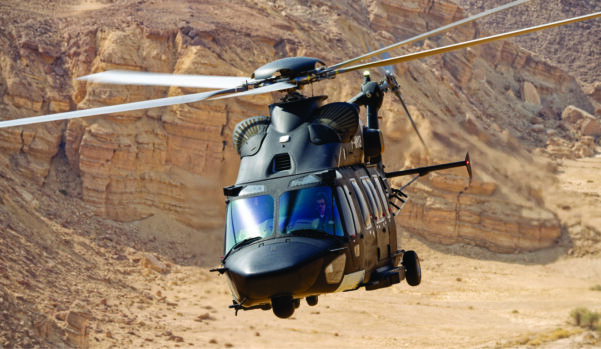
Ghana Ministry of Defence Airbus H175

Bell Textron Bell 407GXi to join South Africa’s Transmission Company