

Q: Congratulations on your tenure as Rector. The Nigerian College of Aviation Technology (NCAT) has over 50 years of experience in aviation training. How would you describe the College’s journey so far, and what major milestones stand out? Over this period, approximately how many aviation professionals has NCAT produced?
A: Thank you very much. It is indeed a great honour and responsibility to lead an institution with such a rich history and tradition of excellence as the Nigerian College of Aviation Technology (NCAT).
The NCAT, Zaria is established by Act Of 1964 with a mandate to train pilots, air traffic controllers, aircraft maintenance engineers, aeronautical Telecommunications engineering personnel, and several other aviation specialists for the aviation industry and training such as in the fields of humanities, science and applied learning and conducting research in Aviation Development. The College celebrated its Diamond Jubilee (60 years of Aviation training) in the year 2024.
The vision of the College is “to maintain the prestigious position of the foremost aviation training institution in Africa, and be amongst the best in the world”. While the mission is “to consistently provide the aviation industry with professionals and other personnel through training and related services for safe air transportation in accordance with international standards”.
The College Act Of 1964 has been replaced with NCAT Act Of 2022 to obtain academic qualifications. The Act grants it Tertiary status and is accredited by National Board for Technical Education (NBTE) as Polytechnic, AABI, and CMD.
Over the past five decades, NCAT has evolved from a national aviation training institution into one of the foremost aviation training centres in Africa. The College has played a critical role in the development of Nigeria’s aviation industry by producing highly skilled professionals in areas such as pilot training, aircraft maintenance engineering, air traffic control, flight operations, aviation safety, airport management and other specialised aviation disciplines.
Currently, NCAT is one of the four Regional Training Center of Excellence in Africa, with ICAO TRAINAIR PLUS Platinum Excellence status.
One of the major milestones in our journey has been our ability to continuously adapt our training programmes to the changing requirements of the aviation industry. We have invested in modern training facilities, aircraft, flight simulators, air traffic control simulators, maintenance training equipment and other technological resources to ensure that our graduates receive both theoretical knowledge and practical experience.
Another important milestone is our growing international relevance. NCAT has not only trained Nigerians but has also provided training opportunities for aviation professionals from other African countries and beyond. Our collaboration with national, regional and international aviation organisations (AABI) has further strengthened our position as a centre for aviation training and professional development.
Perhaps our greatest achievement, however, is the human capital we have developed over the years. More than 80% of aviation professionals who have passed through NCAT are today contributing to the aviation industry in Nigeria, Africa and other parts of the world. They include pilots, aircraft maintenance engineers, air traffic controllers, flight operations officers, aviation safety professionals, instructors, managers and other specialists.
Q: When you assumed office as Rector in February 2025, you came with specific priorities and a vision for the College. What were your major priorities, and how much progress has been made in achieving them? Are there any areas where you have had to adjust your original plans?
A: When I assumed office as Rector in February 2025, I came in with a clear understanding that NCAT is a strategic institution not only for Nigeria, but for the entire African aviation industry. My priorities were therefore centred on strengthening the College, improving the quality of training, upgrading our infrastructure, developing our human capital, embracing technology, and positioning NCAT as a globally competitive aviation training institution.
One of my major priorities has been improving training infrastructure and equipment. Aviation training is highly practical, and the quality of training depends significantly on the availability and reliability of aircraft, simulators, laboratories, workshops and other training facilities.
Another key priority has been enhancing the quality and relevance of our academic and professional programmes. The aviation industry is changing rapidly, and training institutions must change with it. We are reviewing our programmes and exploring opportunities to introduce or strengthen training in areas such as unmanned aviation, artificial intelligence, cybersecurity, advanced simulation, aviation safety and other emerging technologies.
Human-capital development is also central to our agenda. We want our instructors, engineers, technical personnel, administrators and other staff to continuously upgrade their knowledge and professional competencies. An aviation college can only be as strong as the people who deliver its training.
We have also placed considerable emphasis on partnerships and international collaboration. NCAT cannot operate in isolation. We are strengthening relationships with airlines, aviation organisations, regulatory bodies, universities, research institutions and international partners to create opportunities for knowledge exchange, professional development, industry exposure and employment pathways for our graduates.
Another important area is financial sustainability and efficient management of resources. We have been looking at ways of improving internally generated revenue while ensuring that our resources are used transparently, responsibly and efficiently. Our objective is to strengthen the financial capacity of the College without compromising the quality and affordability of training.
In terms of progress, I would say that we have made significant strides, although there is still much work to be done. As for adjusting our original plans, leadership requires flexibility. The vision remains largely unchanged, but the implementation strategy must respond to emerging realities.
Q: As one of Africa’s leading aviation training institutions, what distinguishes NCAT from other aviation training organisations on the continent? How internationally recognised and accepted are NCAT’s certificates, licences, and qualifications?
A: I would say that NCAT’s greatest competitive advantage is the combination of experience, comprehensive aviation training, practical exposure, qualified instructors, infrastructure and our strong connection with the aviation industry.
For more than five decades, NCAT has remained focused exclusively on aviation training. This gives us a depth of institutional experience that is difficult to replicate. We train professionals across several aviation disciplines, which also creates an important advantage because aviation is an interconnected industry. A pilot, an air traffic controller, an aircraft maintenance engineer, a flight operations officer and an aviation safety professional must all understand how their responsibilities interact.
Another major advantage is our emphasis on practical competency. Aviation is a safety-critical industry, and our training goes beyond classroom theory. Depending on the programme, trainees have access to aircraft, flight simulators, air traffic control simulation, maintenance workshops, laboratories and other specialised training facilities. This allows trainees to develop practical skills in an environment that closely reflects actual aviation operations.
Our instructors and technical personnel are another important strength. We have professionals with significant operational and industry experience, and we continue to encourage staff development so that our training remains aligned with developments in the aviation sector.
On international recognition, NCAT operates within the Nigerian aviation regulatory framework and aligns its training with applicable International Civil Aviation Organization (ICAO), AATO, AABI standards and recommended practices, as well as relevant national regulatory requirements. Where a particular licence or qualification is subject to validation, conversion or additional requirements in another country, those requirements must naturally be satisfied by the individual trainee.
Therefore, it is important to distinguish between an NCAT training certificate and a regulatory licence. Training certificates demonstrate successful completion of a particular programme, while professional licences and their privileges are issued or recognised by the appropriate aviation authority. International acceptance of a licence can depend on the regulations of the country where the professional intends to exercise those privileges.
Our objective is to ensure that the training delivered at NCAT meets internationally benchmarked standards, giving our graduates a strong foundation for professional practice both in Nigeria and internationally.
So, I would describe NCAT not simply as a Nigerian aviation school, but as an African aviation training institution with an increasingly global outlook.
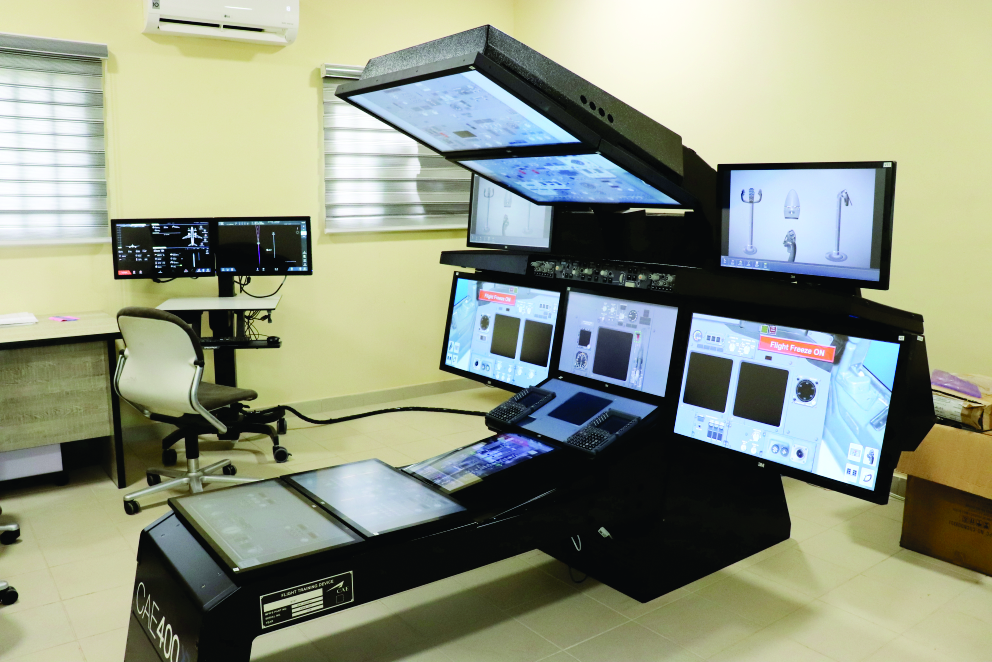
Modern flight simulation training facility at NCAT
Q: There is often concern about the adequacy of aviation training infrastructure in Africa. Could you tell us about NCAT’s practical training resources? Specifically, how many training aircraft, flight simulators, maintenance training facilities, air traffic control simulators, and other specialised training equipment does the College currently have?
A: Aviation is a highly practical and safety-critical industry, so at NCAT we understand that quality training must be supported by appropriate infrastructure, modern equipment and sufficient opportunities for hands-on experience.
NCAT has developed a broad range of training facilities to support the different areas of aviation training we provide. These include training aircraft for pilot training, flight and procedure simulators, air traffic control simulation facilities, aircraft maintenance workshops, laboratories, avionics and electrical training equipment, navigation and communication training systems, as well as other specialised aviation training facilities (B737).
For pilot training, our approach combines ground school, simulator training and actual flight experience. The simulators are particularly important because they allow trainees to practise procedures, emergency situations, instrument flying and decision-making in a controlled environment before progressing to, or complementing, actual flight operations.
For Air Traffic Control training(3D), we have simulation facilities that enable trainees to practise air traffic management procedures and develop the decision-making and coordination skills required in real operational environments.
In the area of Aircraft Maintenance Engineering, our workshops and laboratories provide opportunities for trainees to work with aircraft systems, engines, avionics, electrical systems and other components. The objective is to ensure that trainees develop practical competencies rather than relying exclusively on theoretical instruction. add ND;HHD
We also have facilities supporting training in areas such as aviation safety, flight operations, airport management, aviation security, communications, navigation and other specialised aviation disciplines.
Regarding the exact number of aircraft, simulators and other equipment, these figures are subject to continuous change as equipment is acquired, upgraded, undergoing maintenance or replaced. I would therefore prefer to give the current figures based on the College’s official equipment inventory rather than provide figures that may quickly become outdated.
What is perhaps more important than the numbers alone is our commitment to ensuring that our facilities remain serviceable, technologically relevant and aligned with regulatory and industry requirements. We are continuously looking at areas where additional investment, modernisation or replacement is required.
Consequently, part of our development strategy is to continue upgrading our training infrastructure so that NCAT remains competitive with leading aviation training institutions internationally.
Our philosophy is simple: you cannot produce world-class aviation professionals with outdated training methods and inadequate practical exposure.
Q: What do you consider the major causes of skilled professionals shortage in the global aviation industry, and what role is NCAT playing in addressing it? At the same time, there are concerns that some qualified Nigerian pilots and other aviation professionals struggle to secure employment with airlines. How do you reconcile these two situations?
A: The issue of aviation manpower requires us to look at both sides of the equation: the availability of qualified professionals and the availability of sustainable employment opportunities for those professionals. Globally, the aviation industry is experiencing significant demand for skilled personnel in areas such as pilots, aircraft maintenance engineering, air traffic management, aviation safety, avionics, flight operations and other technical fields. There are several reasons for this. The first is the growth and expansion of the aviation industry. As air transport increases, the demand for qualified personnel also increases.
Secondly, aviation is a highly specialised industry. Training a competent pilot, aircraft maintenance engineer or air traffic controller requires considerable time, investment, practical experience and regulatory oversight. We cannot simply produce these professionals overnight.
There is also the issue of an ageing aviation workforce and the retirement of experienced professionals. As experienced personnel leave the industry, we must ensure that a new generation is adequately trained and ready to take their place.
Technology is another factor. The aviation professional of today requires competencies that were not necessarily required in the past. Areas such as artificial intelligence, automation, cybersecurity, advanced avionics, unmanned aircraft systems and data analytics are creating new skill requirements.
At NCAT, we see our responsibility as going beyond simply producing certificates. Our responsibility is to produce competent, safety-conscious and industry-ready professionals. We continuously review our curricula, strengthen practical training, upgrade our facilities and expose trainees to emerging technologies and industry requirements.
Now, regarding the apparent contradiction between a shortage of aviation professionals and reports of unemployed or underemployed Nigerian pilots, I think we need to make an important distinction.
A shortage of aviation professionals does not necessarily mean that every qualified professional will immediately have a job. The shortage may exist in particular categories, regions, experience levels or specialised areas, while there may simultaneously be an oversupply of entry-level candidates in another category.
For example, an airline may require pilots with specific aircraft type ratings, minimum flight hours, operational experience or other competencies. A newly qualified pilot may possess the basic licence but still need additional experience and qualifications before becoming competitive for a particular airline position.
This is why NCAT places emphasis on employability and competency, rather than certificates alone. We want our graduates to have transferable skills and to understand that aviation offers opportunities beyond airline pilot positions. We are also encouraging our trainees to develop entrepreneurial and technological skills so that they can identify opportunities beyond traditional employment models.
Ultimately, solving the manpower challenge requires a collaborative approach involving government, regulators, training institutions, airlines, airports, maintenance organisations and the private sector.
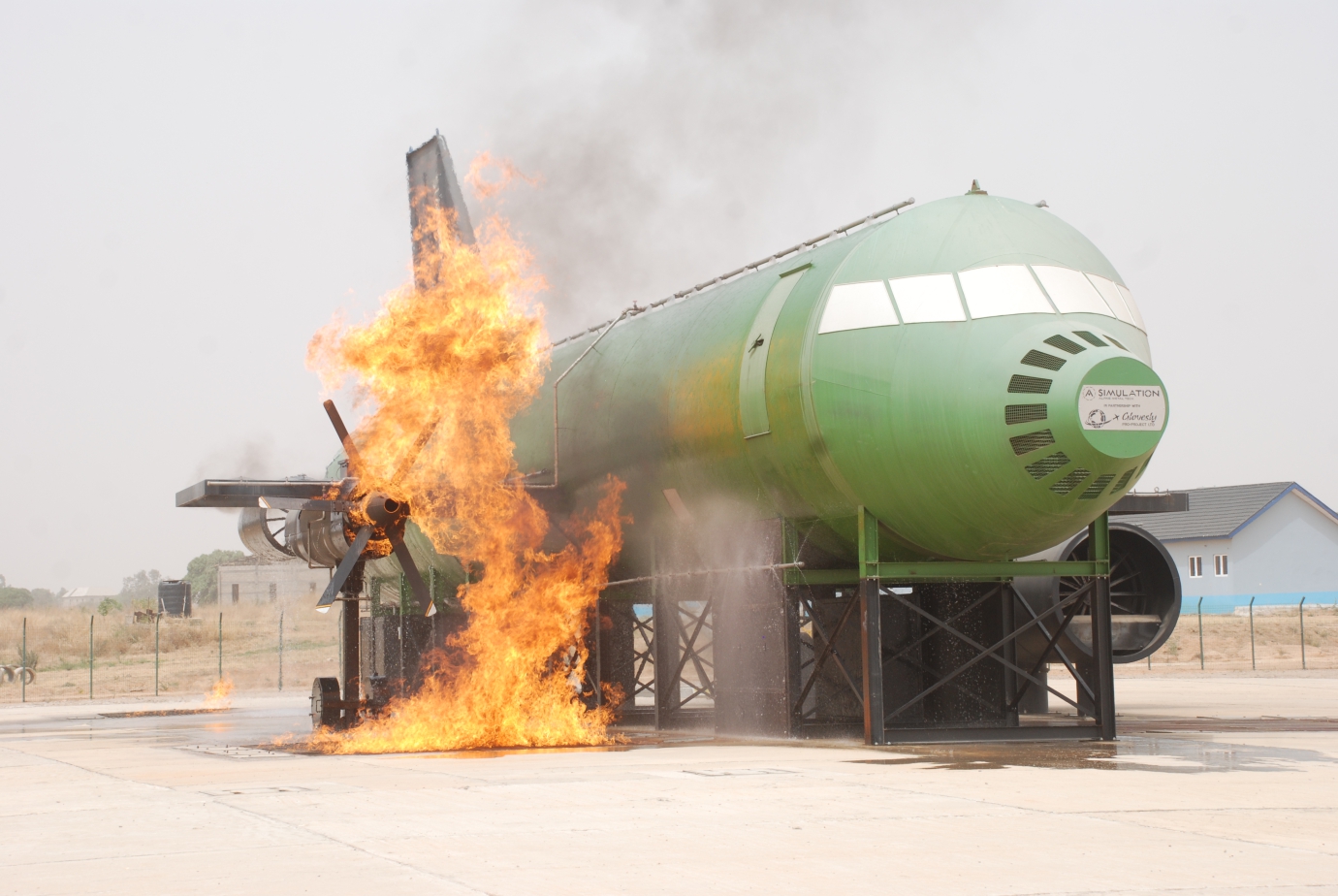
A fire simulator aircraft mock-up used to provide hands-on experience in aviation safety
Q: Aviation is rapidly being transformed by artificial intelligence, machine learning, predictive maintenance, automation, blockchain, advanced simulation, drones, and data analytics. How is NCAT adapting its curriculum and training methods to prepare students for this technologically driven aviation environment?
A: Aviation is entering a new technological era, and as a leading aviation training institution, NCAT recognises that we cannot prepare students for the future using only the technologies and training methods of the past.
Our approach is therefore to integrate emerging technologies into our existing aviation training framework while maintaining safety, human competence and regulatory compliance as the foundation.
One area receiving increasing attention is Artificial Intelligence and machine learning. AI is already influencing areas such as flight operations, air traffic management, weather analysis, safety management, predictive maintenance and decision support. We are therefore looking at how AI can be incorporated into our training programmes so that our trainees understand both its capabilities and its limitations.
We also recognise the growing importance of data analytics. Modern aviation generates enormous amounts of operational, maintenance and safety data. Aviation professionals must be able to understand and interpret this information to support better decision-making. Consequently, we are encouraging greater exposure to data-driven approaches in areas such as safety management, maintenance and operational planning.
Another important area is predictive maintenance. Instead of waiting for equipment or aircraft components to fail, modern maintenance systems increasingly use sensors, operational data and analytical tools to identify potential problems before they become failures. This is changing the role of the aircraft maintenance engineer, and our training must reflect that evolution.
We are also strengthening the use of advanced simulation. Simulation is already an important part of aviation training, but the technology is becoming increasingly sophisticated. High-fidelity simulators can provide realistic training scenarios, including emergency situations that may be difficult or unsafe to reproduce during actual operations.
Unmanned Aircraft Systems and drone technology are another important area. The use of drones is expanding rapidly across sectors such as surveying, agriculture, logistics, security, infrastructure inspection and emergency response.
We are also paying attention to cybersecurity and digital resilience. As aircraft, airports and air traffic systems become increasingly connected, protecting aviation systems and information from cyber threats becomes an essential component of aviation safety.
With regard to blockchain and other digital technologies, we are examining their practical applications in areas such as aviation records, identity management, maintenance documentation, supply-chain management and secure data exchange. However, we believe that technology should be adopted based on its actual value to aviation rather than simply because it is fashionable.
Most importantly, we are adopting the principle that technology should complement, not replace, professional competence and human judgement. Aviation remains a safety-critical industry. An aviation professional must understand the technology but must also be capable of making sound decisions when technology fails, provides incomplete information or produces an unexpected result.
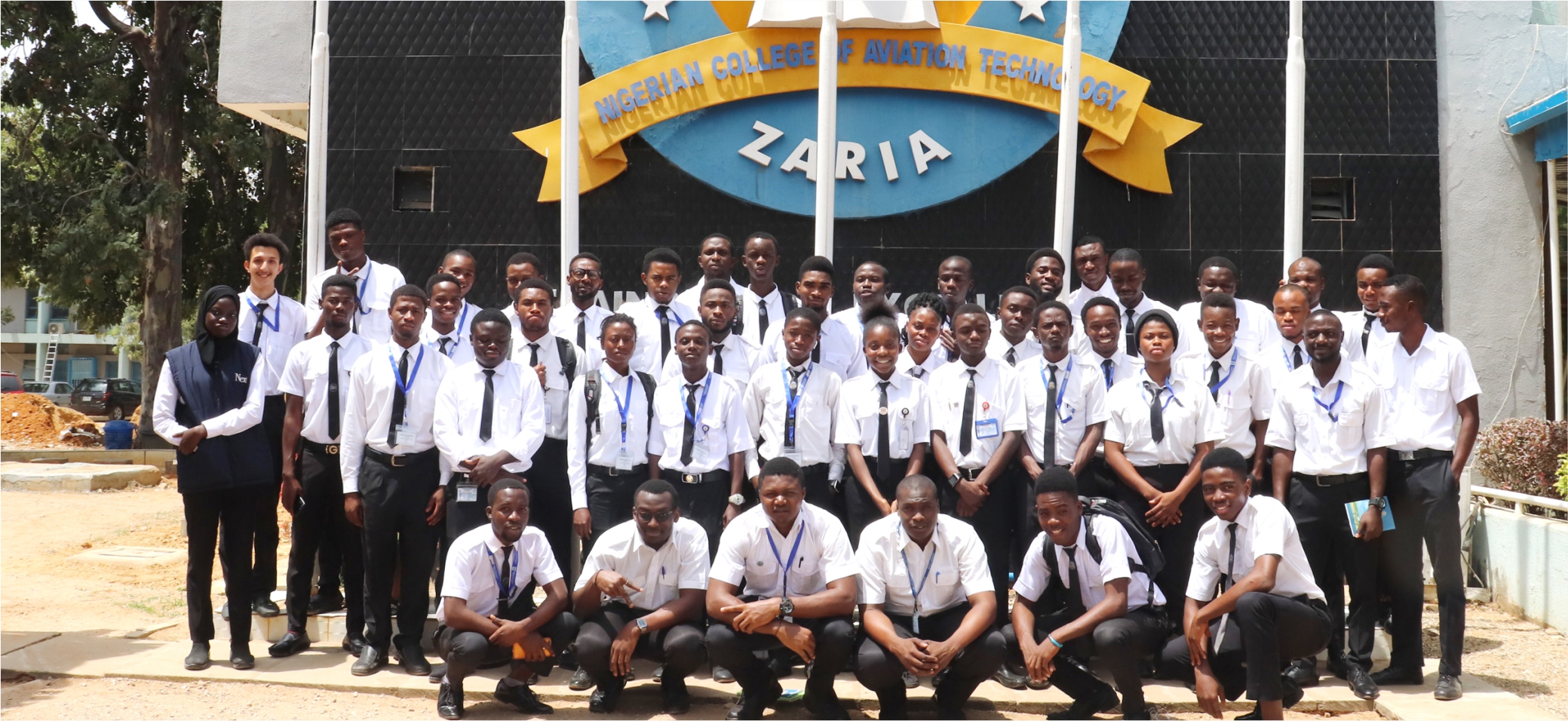
A group photograph of students at the Nigerian College of Aviation Technology (NCAT)
(Source: NCAT)